
Blog
Early Symptoms of Heart Disease You Should Never Ignore

Heart problems rarely arrive with dramatic background music and flashing warning lights. Most people expect a movie-style chest clutch before they take heart health seriously. Real life works differently.
Many early symptoms of heart disease start quietly. People often ignore them because they seem small, temporary, or connected to stress and busy schedules. A little fatigue here. Mild chest discomfort there. Breathlessness after climbing stairs. Most people blame work pressure, lack of sleep, or “getting older.”
That delay can become dangerous.
According to the World Health Organization, cardiovascular diseases still stay as one of the leading causes of death worldwide. Early awareness and timely medical care do improve outcomes, quite significantly.
Patients who go to hospitals for things like enlarged prostate treatment in Delhi sometimes discover unrelated heart risk factors during routine health evaluations . It kinda shows how preventive healthcare matters more than people usually think.
This guide breaks down the early symptoms of heart disease, the main warning signs, key risk factors, and when you should consult a doctor right away.
What Is Heart Disease?
Heart Disease refers to conditions affecting the heart and blood vessels.
It includes:
- Coronary artery disease
- Heart failure
- Arrhythmia
- Heart valve disorders
- High blood pressure-related heart complications
The most common form is Coronary Artery Disease, where arteries become narrow because of plaque buildup.
This reduces blood flow to the heart and increases the risk of heart attacks.
Also Read : Is RIRS Surgery the Best Option for Kidney Stones in Delhi? What Patients Should Know
Why Early Symptoms Matter
The body typically throws out warning signals before any serious heart conditions start, sort of like a quiet alert you almost miss. If you ignore those signs , you end up delaying the diagnosis and the right treatment, sometimes by a lot. A lot of people think heart disease only hits older adults , but these days that idea doesn’t hold up.
Modern routines—poor nutrition , high stress levels, smoking , excess weight, diabetes, and a lack of movement are raising heart risks for younger adults too, not just for seniors.
That is why catching early heart trouble symptoms early matters so much for long term well-being.
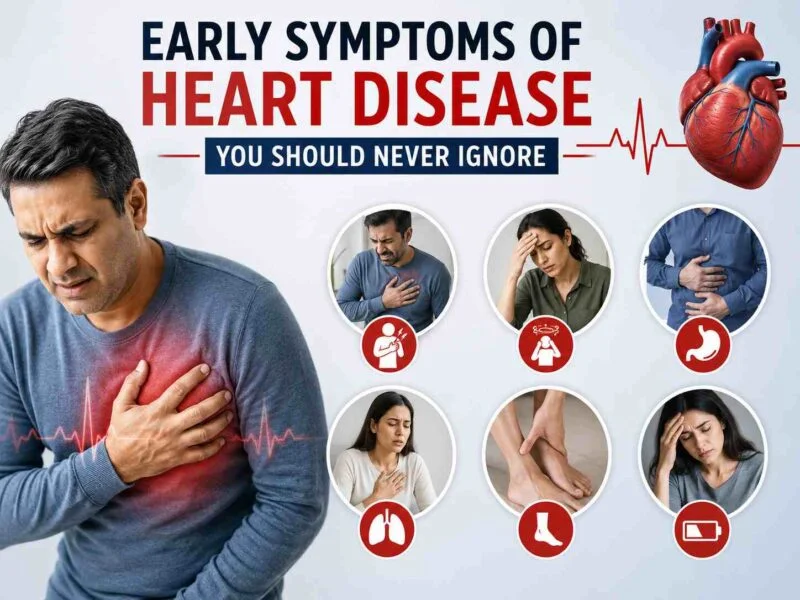
1. Chest Pain or Chest Discomfort
Chest pain remains one of the most common symptoms of heart problems.
The discomfort may feel like:
- Tightness
- Pressure
- Burning sensation
- Heaviness
- Squeezing pain
Not every chest pain means heart disease. However, recurring discomfort should never be ignored.
According to the American Heart Association, chest discomfort during physical activity may signal reduced blood flow to the heart.
Some people describe it as “an elephant sitting on the chest.” Others describe it as severe acidity.
The heart unfortunately does not provide subtitles.
2. Shortness of Breath
Heart Failure and other cardiac conditions can reduce the heart’s ability to pump blood effectively.
This may cause:
- Breathlessness while walking
- Difficulty climbing stairs
- Trouble breathing while lying down
- Fatigue during simple activities
Many people ignore shortness of breath because they assume poor fitness caused it.
If breathlessness appears suddenly or worsens over time, medical evaluation becomes important.
3. Unusual Fatigue
Feeling tired after a long day is normal.
Feeling exhausted after simple daily activities is not.
Persistent fatigue can appear as one of the early signs of heart problems, especially in women.
The body works harder when the heart struggles to pump blood efficiently. This extra strain often leads to low energy levels.
If someone feels unusually tired despite proper rest, doctors may recommend cardiac evaluation.
4. Irregular Heartbeat
An occasional skipped heartbeat usually does not indicate serious disease.
However, frequent palpitations or racing heartbeat may signal underlying cardiac conditions.
High Blood Pressure and other cardiovascular problems can affect heart rhythm.
Symptoms may include:
- Fluttering sensation
- Rapid heartbeat
- Dizziness
- Fainting episodes
- Anxiety-like feelings
People often mistake cardiac symptoms for stress or panic attacks. That confusion delays diagnosis.
5. Pain in Arms, Neck, Jaw, or Back
Heart-related pain does not always stay in the chest.
Sometimes discomfort spreads to:
- Left arm
- Both shoulders
- Neck
- Jaw
- Upper back
This happens because nerves connected to the heart also connect with nearby body areas.
Women especially may experience less obvious heart attack symptoms compared to men.
That is why doctors recommend paying attention to unusual pain patterns combined with fatigue or breathlessness.
6. Swelling in Legs or Feet
Fluid buildup in the legs, ankles or feet can point to sluggish blood circulation or just… not enough flow.
It often shows up when the heart can’t manage the pumping job quite as well, you know.
Swelling may also appear due to kidney issues, or even liver conditions, so getting a proper medical diagnosis really matters, otherwise it’s kinda guessing.
And here’s something a bit unexpected: hospitals that are treating patients for unrelated matters, like laser treatment for kidney stones, sometimes notice concealed cardiovascular risk factors during routine health checkups.
Basically the body’s systems are a lot more intertwined than most people assume, no matter how separate they seem.
7. Dizziness or Fainting
Reduced blood flow to the brain can cause:
- Dizziness
- Lightheadedness
- Sudden weakness
- Fainting
These symptoms may occur because of abnormal heart rhythms or circulation problems.
Frequent dizziness should never become a “normal” part of daily life.
Risk Factors That Increase Heart Disease
Several lifestyle and medical factors increase the risk of Cardiology related conditions.
Common Risk Factors:
- Smoking
- Obesity
- Diabetes
- High cholesterol
- Lack of exercise
- Chronic stress
- Poor diet
- Excess alcohol consumption
- High blood pressure
- Family history of cardiovascular disease
Modern sedentary lifestyles create major concerns worldwide.
Spending eight hours sitting at work and another four scrolling through phones does not exactly qualify as a cardio workout.
Healthy Heart Symptoms People Should Notice
Not every symptom signals danger.
Certain habits and physical signs often support better cardiovascular health.
Common Healthy Heart Symptoms:
- Stable energy levels
- Normal breathing during activity
- Balanced blood pressure
- Healthy sleep patterns
- Good circulation
- Consistent exercise tolerance
Preventive healthcare and regular checkups help maintain these healthy patterns.
Many patients visiting Hok Super Speciality Hospital for specialized healthcare services also undergo routine health evaluations to detect silent risk factors early.
When Should You See a Doctor?
Seek immediate medical attention if you experience:
- Severe chest pain
- Sudden shortness of breath
- Fainting
- Rapid heartbeat
- Pain spreading to arm or jaw
Even mild but recurring signs of heart problem symptoms deserve professional evaluation.
Early diagnosis often prevents major complications.
That is why regular health screenings remain important, especially for adults above 30 and individuals with diabetes or hypertension.
Patients consulting hospitals for enlarged prostate treatment in Delhi or laser treatment for kidney stones should also consider full-body preventive health assessments because silent heart risks often develop without obvious symptoms.
How to Reduce Heart Disease Risk
Simple lifestyle changes improve long-term heart health significantly.
Helpful Preventive Steps:
- Exercise regularly
- Eat balanced meals
- Reduce processed food intake
- Quit smoking
- Sleep properly
- Manage stress
- Maintain healthy weight
- Monitor blood pressure and sugar levels
According to the World Health Organization, preventive healthcare and healthy lifestyle habits reduce cardiovascular risk substantially.
Small consistent changes usually work better than extreme health plans followed for three days.
Final Thoughts
Recognizing early symptoms of heart disease can save lives. Chest pain, fatigue, shortness of breath, irregular heartbeat, and dizziness should never be ignored.
Usually the body sends subtle warning signals before major complications really show up.
Knowing these kinds of warning signs for cardiac problems, helps people go for medical attention sooner and lower the chance of future troubles.
For higher level healthcare help, with preventive checkups, and meetings with specialists, patients can also get in touch with Hok Super Speciality Hospital via its Google Business Profile, and through its healthcare services.